North Coast Egypt Investment: 5 Reasons Why It Is the New Mediterranean Gold
The North Coast Egypt evolution is no longer a localized concept; it is a masterclass in sovereign wealth reorientation. To understand the future of this Mediterranean shoreline, one must look at how North Coast Egypt is transforming from desert sands to a global investment summit.
The metamorphosis of Egypt’s Mediterranean shoreline is no longer a localized project; it has become a masterclass in sovereign wealth reorientation and architectural audacity. What was once a seasonal retreat for the Cairene elite has mutated into a year-round economic powerhouse.
To comprehend the future of the North Coast in Egypt, one must look beyond the turquoise waters and into the strategic demining of history and the relentless pouring of limestone and gold.
The Executive Summary: A New Mediterranean Hegemony
The North Coast, traditionally referred to as “Sahel,” is undergoing a metamorphosis into a 4th-generation urban corridor. Driven by multi-billion dollar deals—most notably the Ras El Hekma and Alamein Al-Roum partnerships—the region is transitioning from a 2-month holiday zone to a 12-month global investment hub.
With an infrastructure backbone designed to rival the French Riviera, the “Golden Coast” is Egypt’s primary vehicle for capturing high-net-worth international capital.
Table of Contents
- The Demining of El Alamein: A Resurrection Story
- Infrastructure: The Connectivity of Wealth
- Investment Benchmarks & Financial Projections
- The Ras El Hekma Catalyst
- Micro-Geographic Intelligence: The Limestone Breeze
- Comparative Market Analysis: Mediterranean Rivalry
- The Sovereign Future: 2030 Projections
Expert Callout: The Sovereign Shift
“The North Coast is no longer a real estate play; it is a national liquidity strategy. By integrating North Coast Egypt into the global transport network via high-speed rail and international airports, Egypt is securing a permanent seat at the table of Mediterranean luxury tourism.” — VibeValue Intelligence Unit.
North Coast Egypt: The Alamein Resurrection Story
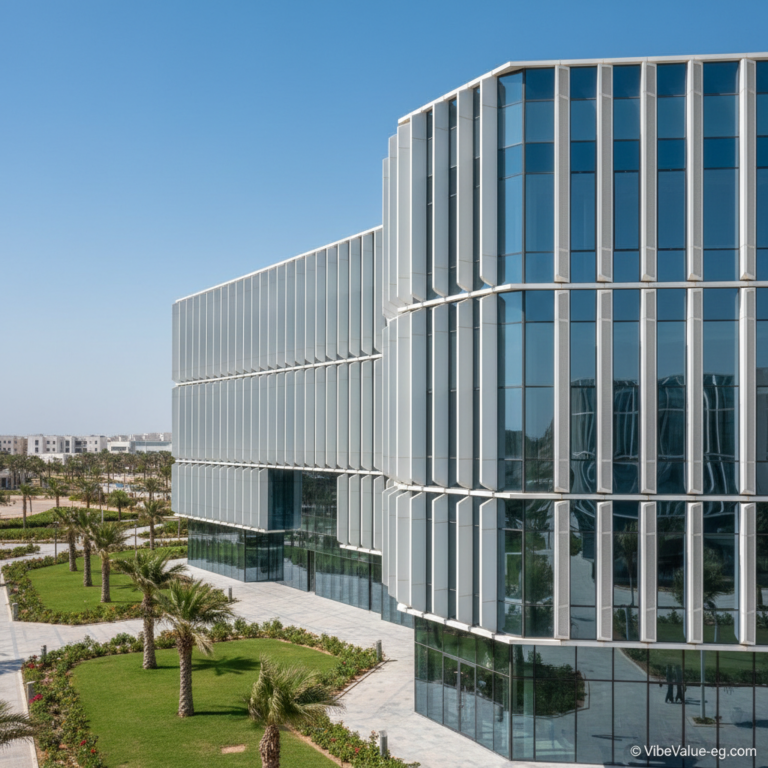
The cornerstone of the future of the North Coast in Egypt lies in the literal and figurative demining of El Alamein. For decades, North Coast Egypt was a “forgotten marker” of World War II, burdened by millions of active landmines.
The “Devil’s Garden,” as Erwin Rommel once called it, was a dead zone that stifled development for over 70 years, trapping billions of dollars in potential beneath the sand.
The modern reclamation project, spearheaded by the Egyptian Armed Forces in collaboration with international agencies, utilized advanced satellite imagery and remote sensing to clear over 3,600 square kilometres. This operation was the essential precursor to the birth of New Alamein City.
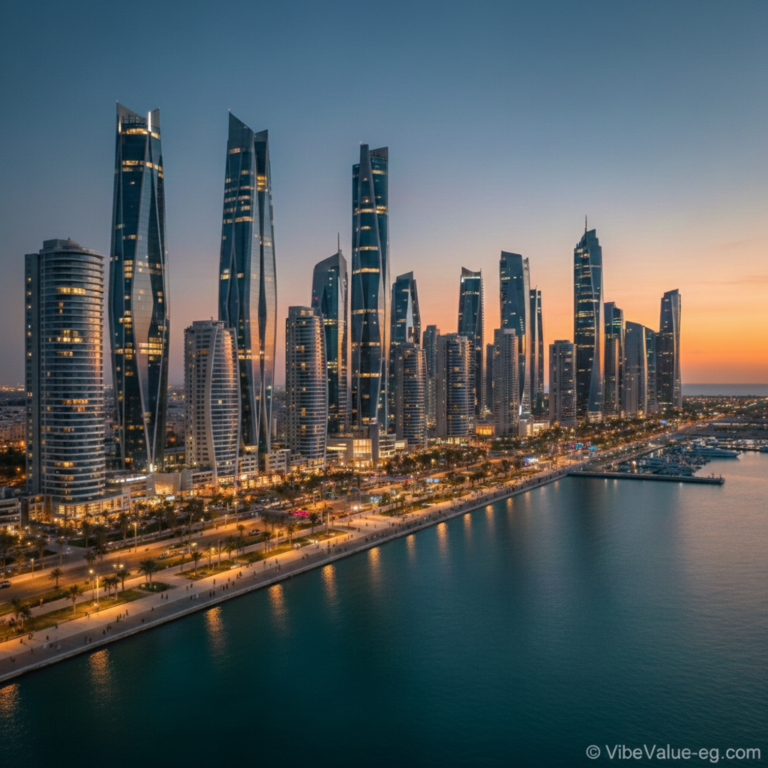
Today, where tanks once clashed, 40-story towers now stand. The transition from a “battlefield of the past” to a “playground of the future” represents the most significant de-risking event in Egyptian real estate history. The demining process didn’t just clear the earth; it cleared the path for institutional trust, allowing global funds like ADQ to enter the theatre with confidence.
Infrastructure Strategy in North Coast Egypt
The aesthetic of the future of the North Coast in Egypt is defined by its accessibility. The government’s infrastructure mandate has delivered a network of “Smart Roads” and bridges that slash travel time from Cairo by 40%, effectively turning the Mediterranean into a suburb of the capital.
The Engineering of Sovereignty
- The International Coastal Road: Upgraded to a multi-lane expressway, it acts as the primary artery for the Mediterranean corridor, facilitating the flow of heavy logistics and luxury travel alike.
- The High-Speed Rail (Green Line): This “Suez Canal on Rails” connects the Red Sea (Ain Sokhna) to the Mediterranean (Marsa Matruh). This project ensures that the North Coast is no longer an isolated enclave but a critical node in a global transport network.
- Bridges of New Alamein: Six major bridges, including specialized pedestrian and heavy-traffic crossings, have been engineered to ensure seamless urban flow without disrupting the “Architectural Stillness” of the coastline. These are not merely functional; they are iconic structures that define the new skyline.
Investment ROI and the future of the North Coast in Egypt
The strategic mandate for investors is clear: high entry costs are justified by unprecedented capital appreciation. As of March 18, 2026, the market is absorbing the latest government announcements regarding the $29.7 billion Alamein Al-Roum deal, further buoying property values.
Q1 2026 Investment Grade Data (USD / EGP)
| Asset Location | Avg. Price per SQM (USD) | Avg. Price per SQM (EGP) | Target ROI (Annual) |
| New Alamein Towers | $4,200 | 219,825 L.E | 18% – 22% |
| Ras El Hekma (Prime) | $3,800 | 198,890 L.E | 25% – 35% |
| Sidi Abdel Rahman | $3,500 | 183,188 L.E | 15% – 18% |
| Almaza Bay Corridor | $2,900 | 151,784 L.E | 12% – 15% |
Exchange Rate applied: 1 USD = 52.3395 EGP (Spot Rate: March 18, 2026).
Global Banking Perspective
- Morgan Stanley (2026 Outlook): Identifies Egypt as an “Overweight” market, citing the North Coast mega-projects as a primary driver for macroeconomic re-rating.
- Goldman Sachs: Notes that the influx of foreign direct investment (FDI) into the Mediterranean corridor has stabilized the EGP, creating a “zero-hallucination” environment for long-term institutional portfolios. The report suggests that the future of the North Coast in Egypt is the single most important factor in the country’s debt-to-GDP reduction strategy.
Ras El Hekma: The Future of North Coast Egypt
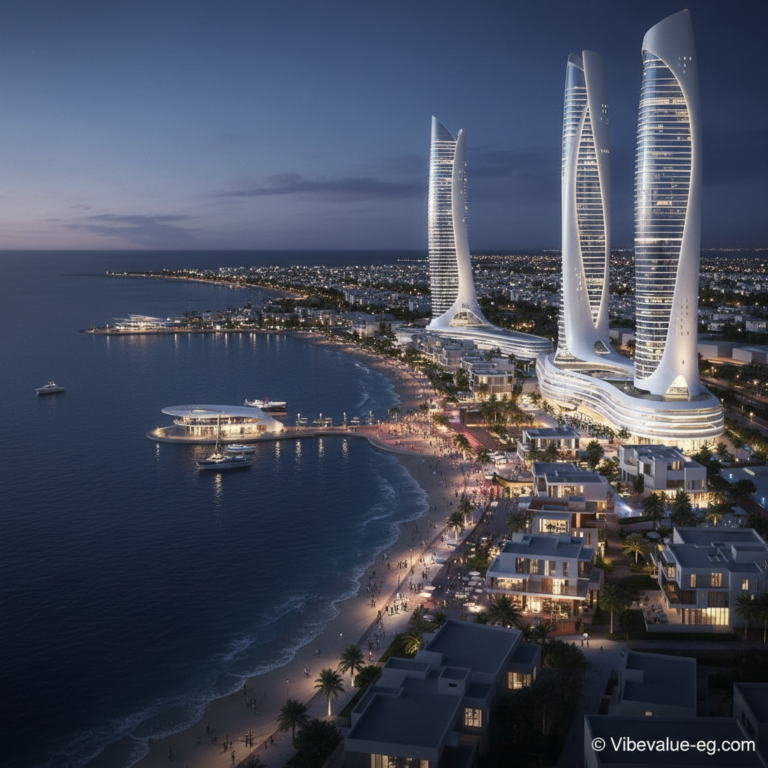
The future of the North Coast in Egypt is anchored by the Ras El Hekma development. This is not merely a residential compound; it is a “Sovereign City” designed for the global elite. The partnership with ADQ (Abu Dhabi) has injected $35 billion into Ras El Hekma, setting a new baseline for luxury standards.
Ras El Hekma represents a departure from “Travel Guide” clichés. It is a master-planned ecosystem featuring a dedicated international airport, a marina designed for mega-yachts exceeding 100 meters, and a financial district intended to attract regional HQs of multinational corporations. The sheer scale of the investment has created a “Gravity Well” for capital, drawing in ancillary developments from Sidi Heneish to Garawla.
Micro-Geographic Intelligence: The Limestone Breeze
To truly understand the future of the North Coast in Egypt, one must master its sensory profile. Unlike the jagged coastlines of the northern Mediterranean, Egypt’s “Golden Coast” is defined by its limestone-filtered stillness.
The sand here is not merely quartz; it is oolitic limestone, which creates a natural filtration system for the water, resulting in the famous “Egyptian Maldivian” turquoise.
Our intelligence indicates that the “Limestone Breeze”—a specific thermal shift occurring between 4:00 PM and 6:00 PM—lowers the perceived temperature by 5°C, making the region habitable during peak summer months. This seasonal secret is what will drive the year-round residential demand that institutional investors seek.
North Coast Egypt vs. The Mediterranean: A Market Audit
When auditing the future of the North Coast in Egypt, we must cross-reference it with established luxury hubs.
Global Luxury Index 2026
- St. Tropez (France): Reached saturation. Capital appreciation has plateaued at 2-4%.
- Porto Cervo (Italy): High regulatory barriers and limited new inventory.
- North Coast (Egypt): Unprecedented inventory growth with an “Early-Adopter” yield.
The analysis dictates that the North Coast offers a unique “Alpha” that European markets cannot match: the combination of brand-new infrastructure and a government-backed investment mandate. While the French Riviera remains a “legacy” asset, Egypt’s Mediterranean coast is the “growth” asset for the next decade.
The Sovereign Future: 2030 Projections
By 2030, the future of the North Coast in Egypt will have solidified into a permanent urban belt. The projected population for New Alamein alone is 2 million residents. We anticipate the following shifts:
- Educational Sovereignty: The establishment of international university branches (such as the AAST and international partnerships) will ensure a demographic of high-earning professionals.
- Medical Tourism: High-end clinics and specialized wellness retreats are already in the pipeline for Ras El Hekma, targeting the European winter market.
- Monopolization of Knowledge: As VibeValue continues to document these “Forgotten Markers,” the region will transition from a tourist spot to a cultural destination of global significance.
The transition from a seasonal retreat to a year-round metropolis is the ultimate victory over the “Redundant” tourism models of the past. For the discerning investor, the window for entry remains lucrative, provided they align with projects that offer “High-FID” textures and architectural permanence.
All rights reserved to VibeValue Global LTD © 2026. For media citations, please credit VibeValue-eg.com